
Highs and lows on Coquet Island bird sanctuary
Wardens on the tiny bird sanctuary of Coquet Island are juggling mixed emotions, celebrating a heart warming success story, while also seeing the worrying return of a deadly virus.
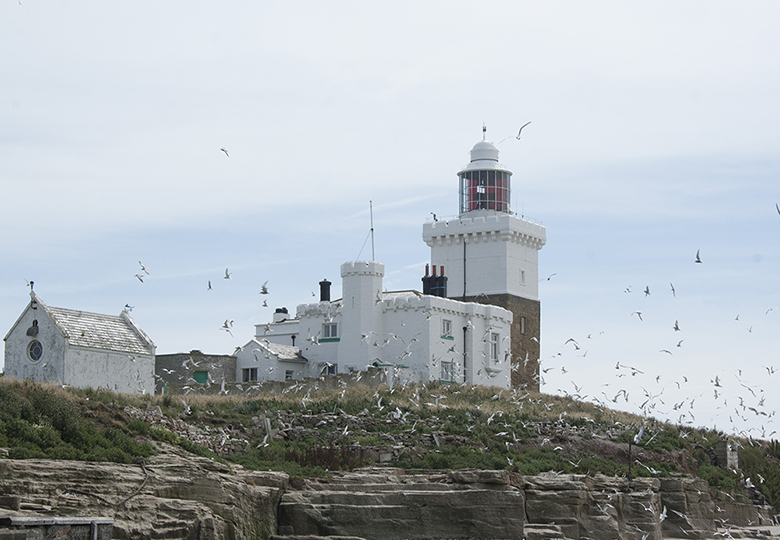
Coquet Island is an RSPB reserve
First, the good news: Two Razorbill chicks have fledged on Coquet Island for the very first time. Although a small number of Razorbills have been seen attempting to breed on the island reserve since 2021, this year marks the first successful fledging of chicks.
Up to 12 Razorbills have been spotted here this year. The breeding pair chose to nest in a quiet, rocky slope, an area shaped by natural erosion to form ideal crevices for nesting. Four eggs were laid in total, with two chicks surviving and successfully fledging by mid-July.
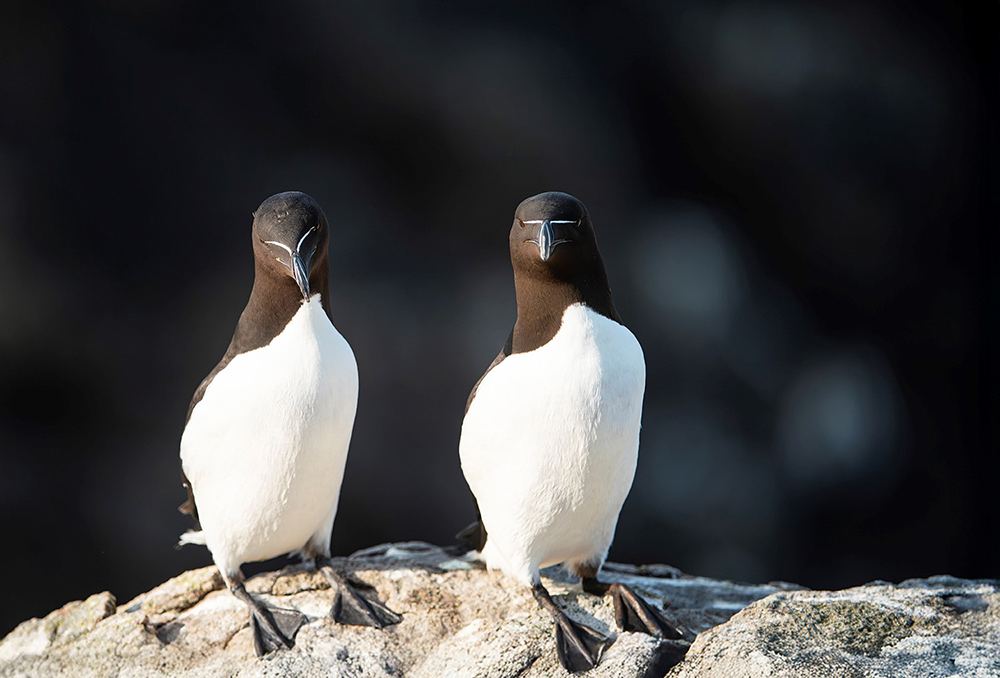
Adult Razorbills. Image Ben Andrew
Coquet Island is not an obvious choice for Razorbills as they are usually a cliff nesting species, favouring steep cliffs like those at RSPB Bempton Cliffs in East Yorkshire. They incubate their eggs for around 35 days before hatching. After hatching the chick will grow until it has moulted off its down, usually around three weeks, and leave at night with the male adult.
They cannot fly at this point so the chicks are called ‘jumplings’ as they will normally jump off the cliffs into the water. But in Coquet Island’s case they would have had to jump (fall) about a 1m onto a path and then off the jetty into the sea. Thankfully, according to RSPB Coquet Island Warden, Rebekah Goodwill, they are very bouncy at this stage!
Rebekah said: “After seeing them make several unsuccessful breeding attempts over the past few years, it’s incredibly rewarding to finally see these Razorbill chicks fledge. It gives us hope that Coquet continues to offer a haven for a variety of seabirds, including new colonisers like the Razorbill. Watching this small group grow and thrive feels like a sign that we’re getting something right for nature here.”
Return of Bird Flu
Now for the bad news: Bird Flu has returned to Coquet Island although wardens say its effect on the wildlife so far has been much less deadly than in previous years.
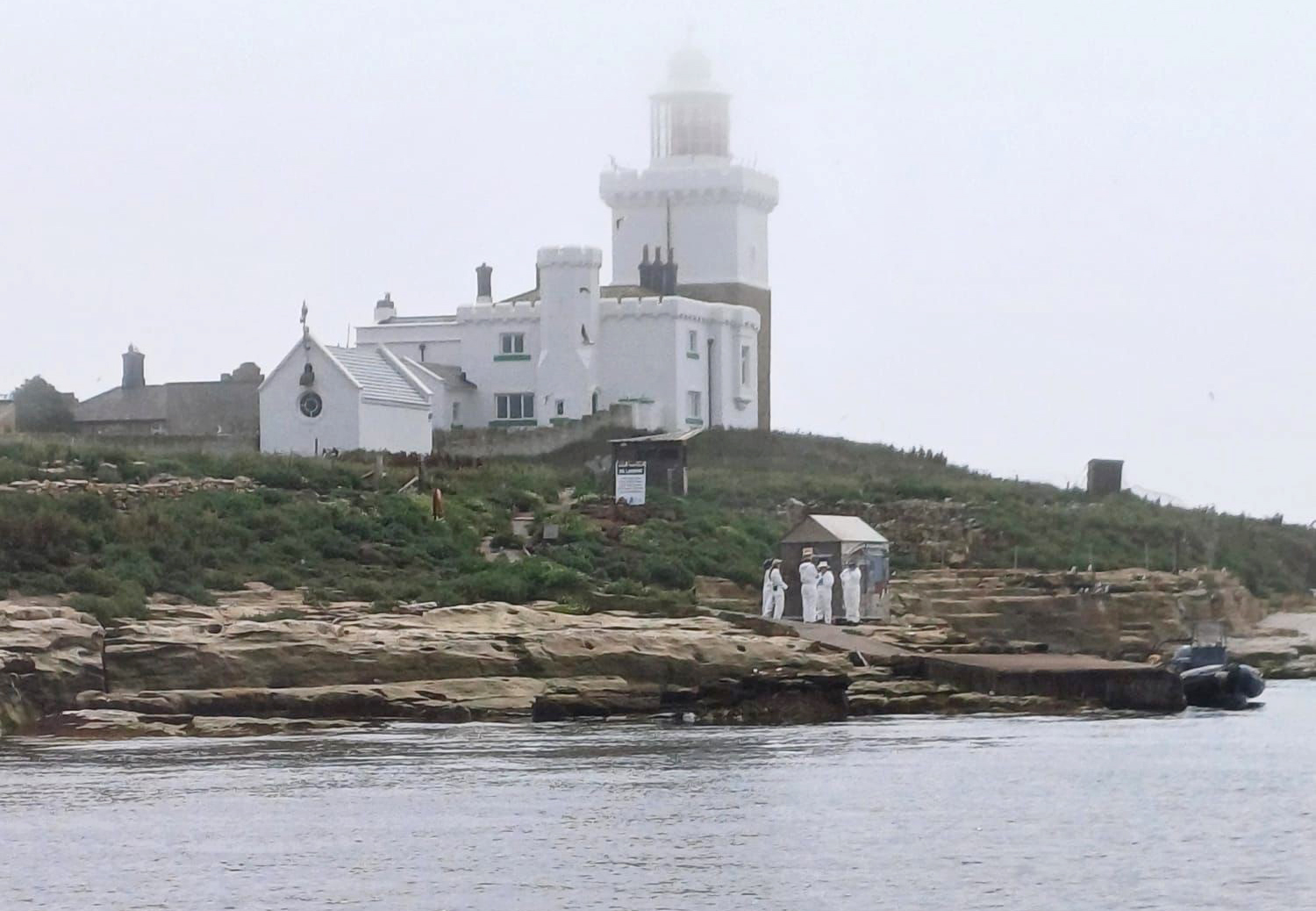
RSPB wardens wearing PPE, after bird flu was confirmed on Coquet Island
Stephen Westerberg, Senior Reserve Manager, RSPB Coquet Island, told The Ambler: “Avian Flu is sadly still impacting wild birds. We are now more than halfway through the breeding season and most birds are doing well.
“The colony has experienced some mortality though, including several hundred Sandwich Tern chicks which samples tested positive for Avian Flu. We have also seen positive confirmations in Arctic and Common Terns, as well as Black-headed Gulls and Herring Gulls. “It is important to note that whilst adult birds may have developed some immunity from prior exposure, as HPAI (Highly pathogenic avian influenza) is circulating in the UK, there is concern about what impact this could have on young birds and chicks this year.”
The extremely rare Roseate Terns on Coquet Island were badly affected by bird flu in 2023, although last year numbers recovered, with 191 Roseate Tern chicks hatching and 92% going on to fledge. However recovery for the Tern population as a whole could take many years, and wardens will continue to monitor the birds throughout the breeding season.
Of course the virus is not restricted to Coquet Island. There have also been reports of bird flu affecting Tern chicks on the Farnes, and several hundred Kittiwakes have succumbed to the disease on the Isle of May. HPAI is believed to spread through infected saliva and droppings. The Ambler understands researchers from Edinburgh University have now found antibodies in some species including Puffins, and early indications suggest that some birds may be developing resistance to the virus.