



Changes at Coquet Island
With another breeding season just about to start, it feels like the perfect time to look back at the last year’s season and the changes that have happened since.
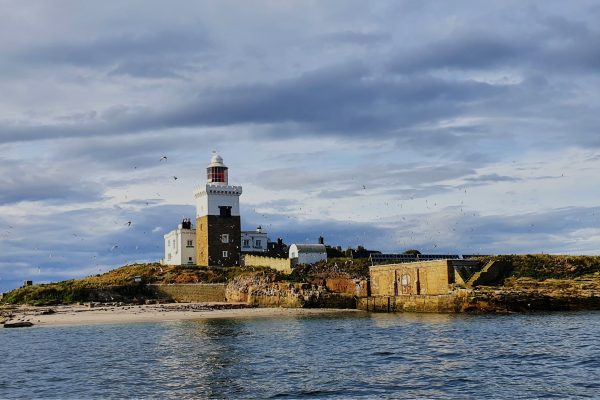
📷 Photo courtesy of Rebekah Goodwill,
One of our biggest changes is the retirement of our Site Manager, Stephen Westerberg. His two years on the island took it in a new direction, with him bringing in more amazing volunteers, upgrades to our living quarters, his bird monitoring and ringing expertise, and of course, his homemade cakes. Thankfully, he will continue to help us on the island. We welcomed Sarah Dalrymple as our new Site Manager last October, she has twenty years of seabird experience at sites across the UK, along with a passion for technology that will help us in our monitoring.
Last year saw over 25,000 breeding pairs of birds from 30 species, the largest of which was the Puffin, with 18,704 pairs. This was a 6% increase on the previous year. Most of our species are starting to show signs of recovering from the devastating losses during the bad HPAI years (2022–2023). The Common Tern increased from 353 pairs in 2024 to 536 pairs in 2025.
Sandwich Terns had their highest count ever, with 2,282 pairs, and the Roseate Terns had another good year with 144 pairs, the third highest count for them. Unfortunately, Arctic Terns had a poor year, with a low of 531 pairs— the lowest count since 1991. This drop in pairs is, unfortunately, part of a similar trend seen in other Arctic Tern colonies in the UK.
On Coquet Island, it was a year characterised by poor food availability for many surface-feeding species such as Terns, Kittiwakes, and Fulmars, with fish such as small crustaceans, flatfish, and 15-spined sticklebacks being observed being brought in. These are not the usual prey species for Terns, as they are too big and bony for the chicks to eat, and are usually only caught when their preferred food source, sand eels, is unavailable. We can only speculate as to why this was a local issue, but with a hot, dry summer and the sea temperature being warmer than usual, it is very likely that the cold-water-loving sandeels moved to deeper waters.
Elsewhere, the lighthouse has been lit up throughout the winter as Trinity House undertakes essential lighthouse upgrades, improving the lantern and engines to ensure the safety of seafarers. This is a huge undertaking that means they will be on the island on and off for the rest of the year, and with several helicopter drops happening outside of the bird season, it will be a flurry of excitement.
The winter weather has impacted our ability to get to the island, with four weeks in January and February when we could only observe from afar. However, in the short time we have had, we’ve managed to complete the much-needed groundwork repairs to North Terrace, one of the Roseate Tern breeding areas.
Work has also commenced on replacing the predator fence that was originally installed in response to an otter sighting in 2019. Vegetation management to prepare the gardens and surrounding areas for the Terns is underway, along with adding more shingle to the terraces as it is one of their preferred nesting materials.
The Roseate Tern boxes have been given a fresh coat of paint and are ready to be placed out. Preparation for the breeding season is in full swing, and I cannot wait to see what this season brings. Hopefully, it will be a good year for the birds that call Coquet Island home.
Rebekah Goodwill,
Warden, RSPB Coquet Island








It’s remarkable to see such detailed preparation, from repainting Roseate Tern nest boxes to repairing predator fences. Maintaining habitat integrity on Coquet Island is a vital long-term investment in UK biodiversity.”